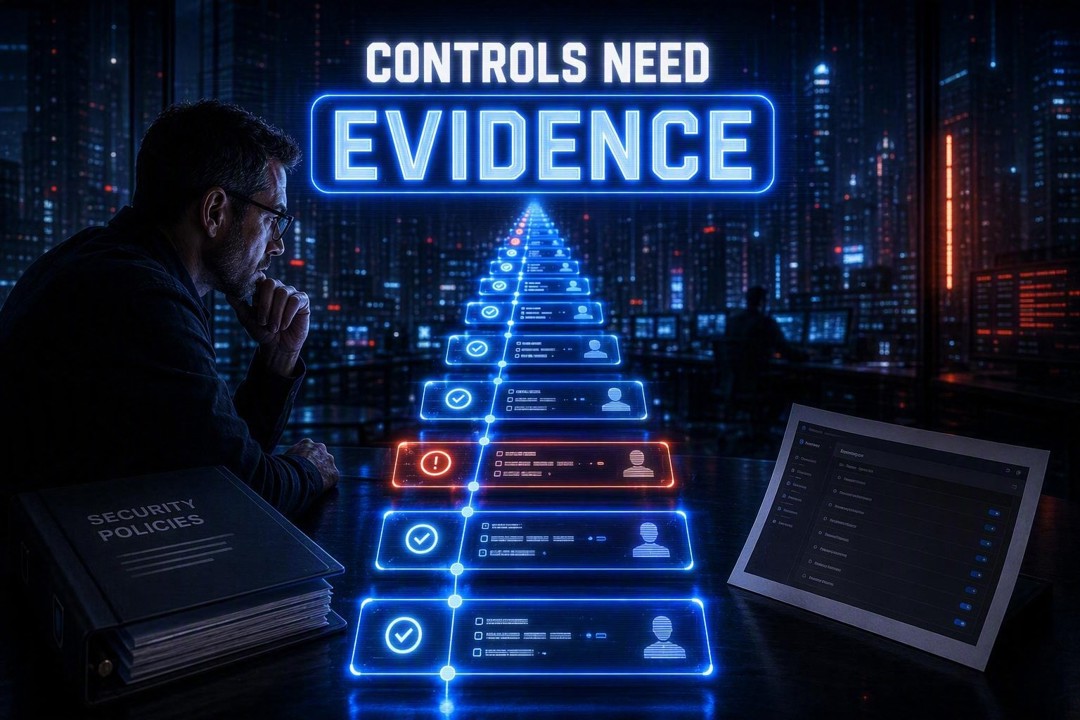
A startup can have written policies, SSO enabled, and a completed SOC 2 checklist, yet still scramble when audit evidence is requested. Those items mostly show control design, what the company intends to do. Audit-ready evidence shows control operation, a repeatable trail of who did the work, when it occurred, what was reviewed or changed, and how exceptions were handled. The aim is to make that trail an ordinary output of engineering and business workflows.
The surprise usually arrives when someone asks for operating records across the audit period, not a current screenshot or a policy PDF. At that point, a folder of artifacts can look complete while the underlying process remains difficult to prove.
Why Can a SOC 2 Checklist Still Lead to an Evidence Scramble
A SOC 2 checklist can confirm that controls were identified, assigned, or configured. It does not, by itself, show that the team followed those controls consistently in real work. An enabled MFA setting shows a current configuration, for example. It does not show whether access was reviewed on the expected schedule or whether a questionable account was investigated and resolved.
Tools matter because they can make a control easier to perform and record. But a tool existing is not proof that the workflow around it occurred. A ticket marked closed, a policy approved in a document system, or a security feature switched on may be a useful starting point. The missing record is often the operating history that connects the control to actual decisions and actions.
What Does Evidence That a SOC 2 Control Operated Actually Show
Operating evidence answers four practical questions:
- Owner: Who performed or approved the control?
- Timing: When did it happen, and does the record cover the relevant period?
- Action or review: What was checked, changed, or decided?
- Exception handling: What happened when the normal path did not apply?
For an access review, that may mean an attestation showing the reviewer, the accounts examined, and a removal decision. For code changes, it may be pull request history showing review and approval before merge. For monitoring, it may be an alert tied to an investigation record. For vendor review, it may be an assessment and a documented decision when a vendor presents additional risk.
The useful test is whether the record belongs to the stated control and appears as part of normal operations, rather than as an isolated artifact assembled near the audit.
Control Design Evidence Versus Operating Evidence
Control design evidence explains what should happen. It includes a security policy, a documented procedure, a role assignment, or a screenshot showing that a setting is enabled. This material matters because it gives the process a defined purpose and boundary.
Operating evidence shows what did happen. It includes dated review logs, approval histories, ticket records, alert and response records, and documented exception decisions. A policy stating that access is reviewed is not interchangeable with a record showing that a named owner reviewed access and acted on the findings.
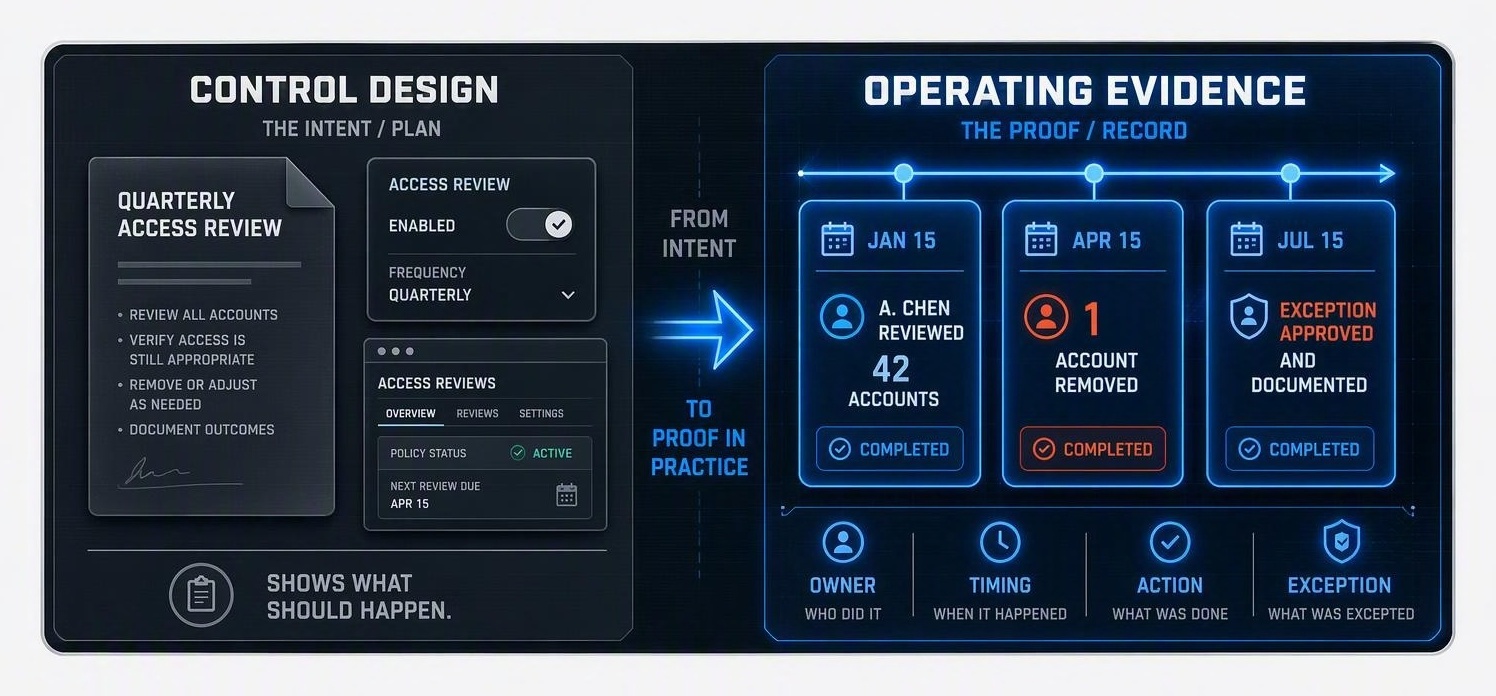
That distinction changes the work. The goal is not to collect more screenshots. It is to ensure the control produces a credible record each time the workflow runs. Agile Clouders approaches readiness by embedding controls in actual systems and establishing evidence collection that accumulates proof continuously, rather than reconstructing it at the deadline.
How to Build SOC 2 Evidence Into Everyday Workflows
Start by tracing each control to the workflow that naturally creates its record. Keep access-review attestations in the identity workflow. Preserve pull request approvals in source control. Link incident response to the ticketing system. Store vendor assessments and decisions with procurement records.
This is not a request to create parallel compliance paperwork. It is a design question: does the existing workflow capture the approval, decision, or exception needed to explain what happened later? Where it does not, add the smallest useful record at the point work occurs.
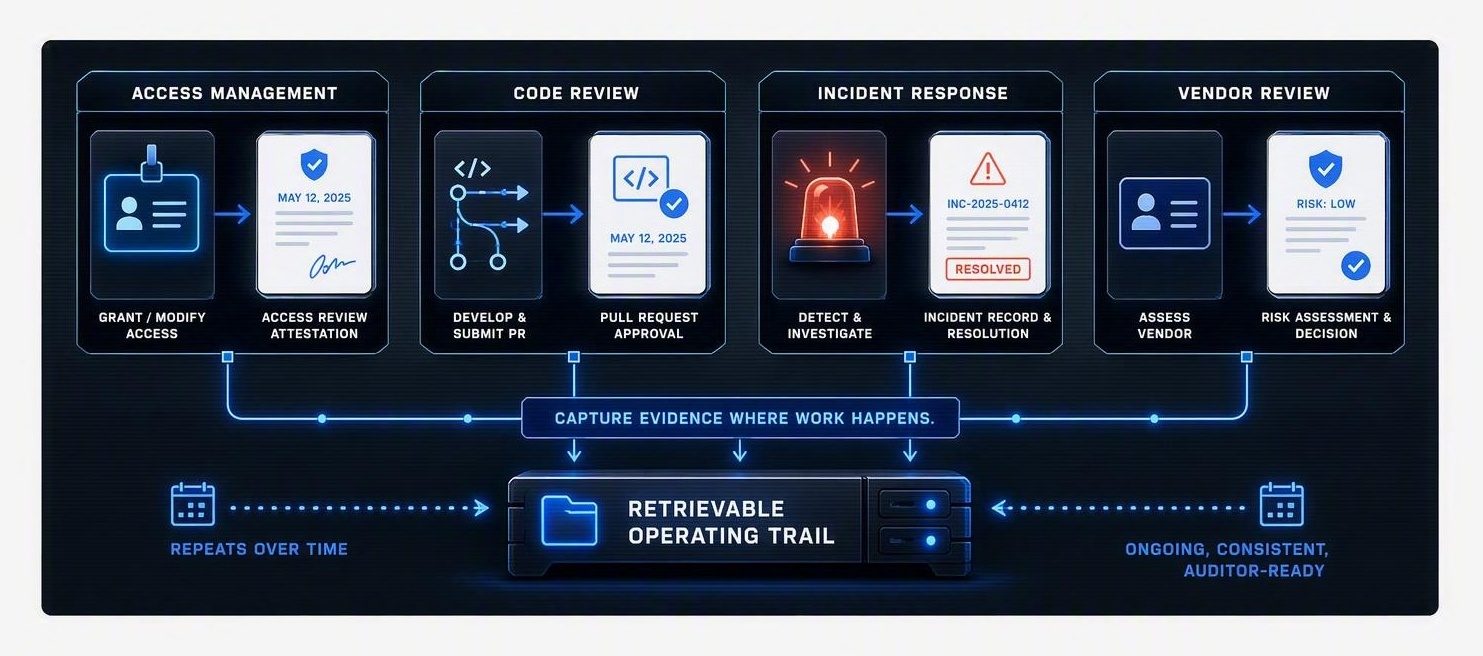
The question becomes: if an auditor asked for the last several occurrences, could the team retrieve them without interviewing people to reconstruct history from memory? If not, the gap is operational, even if the policy and tool are already in place.
Audit Readiness Is an Operating Trail, Not an Artifact Folder
A SOC 2 control is defensible when normal work leaves a consistent trail of ownership, timing, action, and exceptions. Policies and configurations establish intent. Operating records show that the intent became routine practice. Success is not a polished artifact folder at the deadline, but process gaps found early enough to correct.